Cyber Risk Assessment in the UAE: A Practical Guide for SMBs
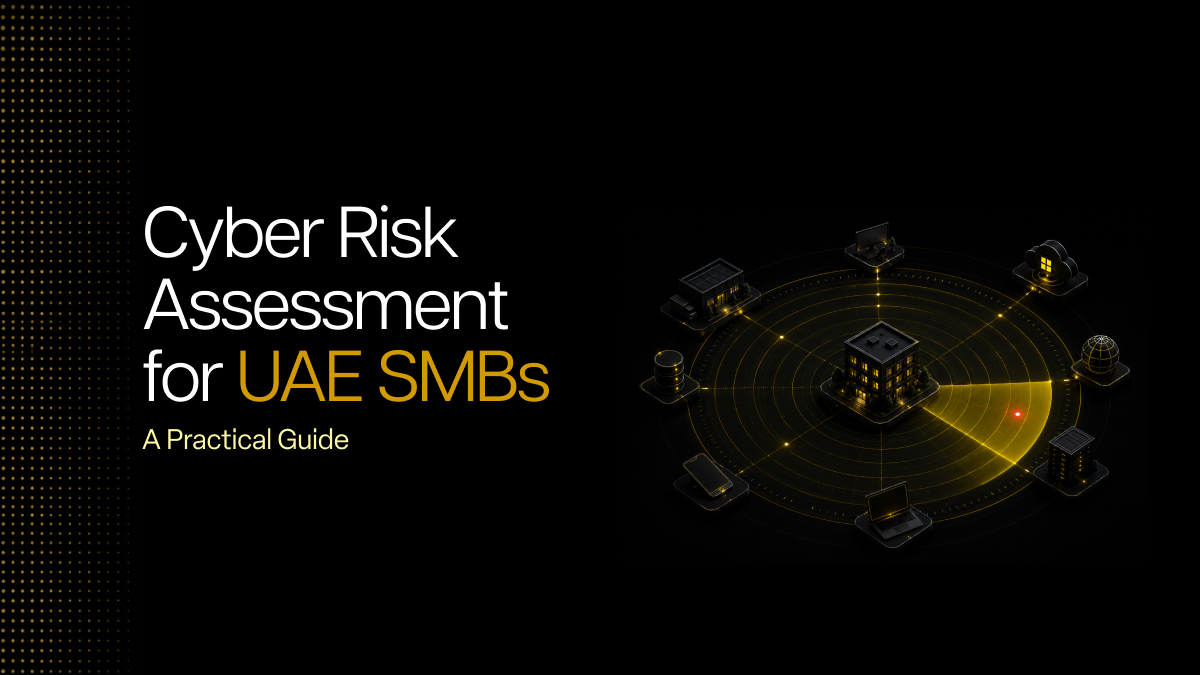
This blog explains why SMBs go for a cyber risk assessment when customers, auditors, insurers, or incidents demand clarity. It breaks down internal risks like employees, devices, access, and networks, along with external risks like attackers, vendors, spoofed domains, and third-party systems. It also explains different types of cybersecurity assessments, the difference between assessment required for regulated and unregulated SMBs.
It’s an unfortunate reality, but it still needs to be acknowledged that most SMBs do not think much about cyber risk in UAE until something forces the issue. Often it's a client asking for proof of security controls before signing a contract, or a phishing email that nearly tricked the finance team into approving a wire transfer. By the time the question lands, it usually arrives with pressure behind it.
A cyber risk assessment answers something every business owner should be able to answer but most can't: where are we actually exposed, and how bad would it be if someone got in? You can't protect what you haven't measured. Which is why an effective cyber risk assessment provides you with a clear picture of what could go wrong and what to fix first.
Internal & External Cyber Risk: Pinpointing Where Your Threats Come From
Most cyber risk for SMBs falls into two buckets. And a good business opts to assess both.
Internal risk lives inside your business: your employees, your network, your devices, your configurations. An employee reusing the same weak password across systems is internal risk. A misconfigured firewall, an open admin account nobody disabled when a staff member left, an unpatched server sitting in the corner, a vendor login that still works months later: these all exist inside your walls. This is where most breaches start: in the security gaps that simply weren’t mapped out properly.
External risk mostly comes from forces outside your control that directly impact your business’s outer facing assets. Attackers scan for exposed services and run phishing campaigns against your staff. Some impersonate your domain to defraud the customers who trust your name. Your vendors belong here too. If a supplier with access to your systems gets breached, that becomes your problem fast, and supply-chain attacks have climbed across the region in recent years. Which brings us to another aspect of external risk, namely geo-political issues that directly impact business operations as well.
A real assessment looks at both sides. Internal weaknesses are what attackers use once they are in. External threats are how they get in. You need the full path, not half of it.
Types of Cyber Risk Assessments
For the most part, cyber risk is assessed on either qualitative or quantitative grounds, which allows businesses to determine how risk is measured as well as what exactly is being evaluated. With that in mind here’s a few different types of cyber risk assessments that SMBs should consider:
It’s important to remember, however, that you don’t need all of these at once. Where you start depends on your sector and what is driving the need.
Cyber Risk Assessment for Regulated vs Unregulated Businesses
This is where cyber risk in the UAE splits into two business realities.
If you operate in a regulated sector (banking, finance, healthcare, insurance, or anything under Dubai Financial Services Authority, Central Bank of UAE, or Abu Dhabi Global Market oversight), an assessment is mandatory and tied to named requirements. Falling short carries real consequences, including fines and contracts you simply cannot win. In particular, the UAE Personal Data Protection Law and Federal Decree-Law No. 34 of 2021 adds obligations around how you handle data and report incidents. Therefore, for these businesses, an assessment doubles as evidence for auditors and regulators.
Alternatively, if your business operates in an unregulated sector, say a trading company or a logistics firm, the legal pressure is lighter, but the actual risk often isn't. Attackers don't check whether you are regulated before they target you. What changes is the driver. For these businesses, the push usually comes from a customer contract or an insurance requirement. The smart owners treat security as a business decision and move before anyone forces them to.
How Lumora Provides Cyber Risk Assessment for SMBs
A cyber risk assessment should not leave an SMB with a long report and no clear next step. The primary value of the assessment is in the decisions it helps the business make. For many SMBs, this clarity is missing. They may have all their security solutions in place but no clear view of how these controls hold up together.
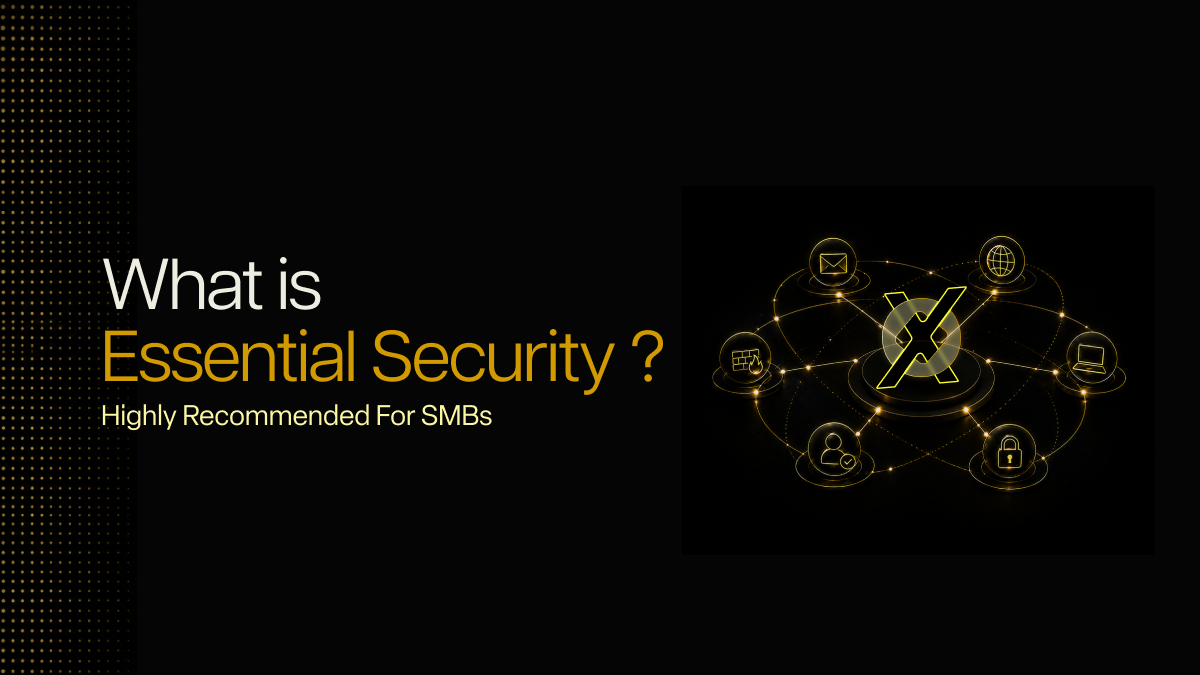
That is why Lumora tackles cyber risk assessment head-on by bring essential security with clarity into the process. And we achieve this with the Lumora Essential Security Review.
The review is built on NIST CSF 2.0, the same structure large organisations use, but sized for smaller businesses. It examines both internal and external risk and maps what you have against a recognised baseline. The output is a prioritised action list and required budget you can hand to your IT and finance team and start working through.
You walk away knowing where you actually stand and what to address first. For a regulated business, that becomes a defensible starting point for compliance. For everyone else, it is the clarity to make a decision instead of hoping you are fine.
If your business is not sure where its cyber risk actually exists in your operations, get in touch with Lumora for a clear assessment of your current security baseline and a practical path to reduce the gaps before they turn into larger business problems.


.avif)