Endpoint Security for SMBs: What Every Device Should Prove in the UAE
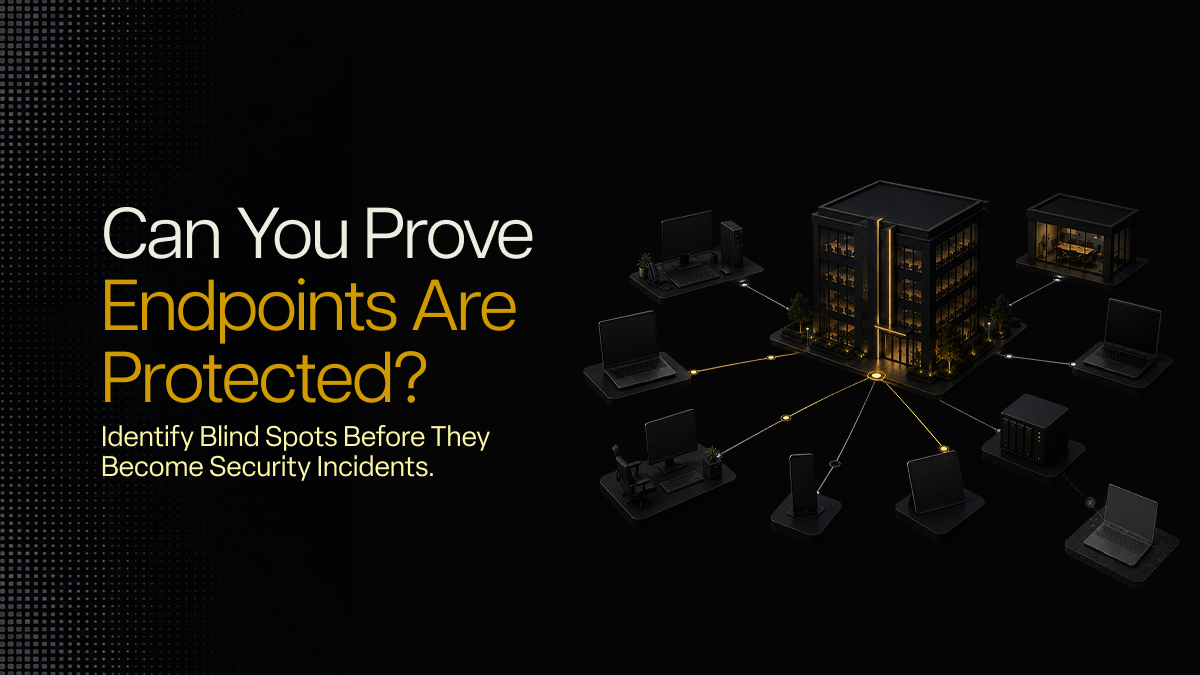
Thefollowing blog explains why endpoint security for SMBs should go beyondantivirus or installed agents. It covers how UAE SMBs need visibility acrosslaptops, contractor devices, remote systems, and shared workstations that carryaccess to business data. It also explains what a mature endpoint baseline should prove: devicecoverage, agent health, policy hardening, alert ownership, containmentreadiness, and monthly reporting. The blog ends by positioning Lumora’s Essential Security Reviewas a way to assess endpoint gaps and build essential security with clarity through managedsecurity and detection andresponse.
The weakest endpoint israrely the device sitting in the main office.
It may be the contractorlaptop used for one project, the finance device with saved browser sessions,the old desktop in a branch location, or the personal laptop someone usedduring a busy week and never removed from company access.
That matters in the UAEin particular, because SMB operations often stretch across offices, emirates,client sites, free zones, outsourced teams, and remote users. The business mayfeel small, but its access footprint is rarely small.
Most companies alreadyhave something installed: antivirus, EDR, Microsoft Defender, or avendor-managed endpoint tool. That is the starting point, not proof of control.
Endpoint security for SMBsshould, therefore, show whether every business device is visible, protected,healthy, and tied into detectionand response. Without that, the device layer becomes a massive blindspot.
Building endpoint security for SMBs starts with an access problem
Most endpointconversations still begin with viruses, ransomware, and suspicious files. Thoseare valid concerns, but they are only part of the picture.
A compromised endpoint isdangerous because of what it can access.
A finance company’slaptop may have active browser sessions into banking portals, Microsoft 365,accounting software, and vendor payment records. A sales device may hold CRMaccess, proposal files, customer contacts, and email threads. A developermachine may have Git access, API keys, cloud console access, local secrets, andtest data.
The device is notvaluable because of the hardware. It is valuable because of the trust attachedto it.
That is why endpointsecurity should be assessed alongside MFA, conditional access, admin roles,SaaS access, browser activity, and device compliance. If a laptop has access tosensitive systems, the business needs to know whether that device is protected,patched, monitored, and still owned by the right user.
What amature endpoint baseline should check
For SMBs, endpointmaturity should not be judged by whether a tool has been installed. It shouldbe judged by whether the business can prove that every device with access tocompany data is protected and monitored.
A mature endpoint baseline should,therefore, show:
- Device coverage: all company-owned, remote, contractor, and high-risk user devices are identified and enrolled.
- Agent health: endpoint agents are active, updated, reporting, and not disabled by users or local admins.
- Policy hardening: tamper protection, ransomware protection, exploit prevention, web control, and application control are configured.
- Access linkage: device status is considered alongside MFA, admin roles, SaaS access, and Microsoft 365 sign-ins.
- Alert ownership: endpoint alerts are reviewed, triaged, and escalated instead of sitting in a dashboard.
- Containment readiness: the business can isolate a compromised device and remove risky access quickly.
- Monthly proof: leadership can see which devices are protected, which need action, and what threats were handled.
This is where endpointsecurity becomes a business control rather than a software subscription. Ifthese answers are unclear, the issue may not be the endpoint product. The issueis that the product has not been turned into an operating baseline through managed security, policyreview, and alert ownership.
UAE SMBs have a different endpoint reality
Endpoint risk in the UAEis shaped by how businesses operate. SMBs make up more than 94%of companies in the UAE, and many run with lean internal teams whileserving customers, vendors, and partners across locations.
The workforce is alsohighly mobile and international. With more than 200+ foreign nationals livingand working in the UAE, SMBs often work with mixed setups: employees acrossemirates, outsourced IT teams, offshore developers, contractors, and staff whotravel across the GCC.
That creates a messydevice layer. Corporate laptops, personal devices, consultant machines, sharedsystems, and remote user devices may all touch business data.
The UAE’s highconnectivity adds to this. Work happens across more devices, networks, andaccess paths. Endpoint security cannot stop at antivirus. Each device needs tobe checked for protection, compliance, access, and behaviour.
The hidden cost of unmanaged endpoints
The cost of weak endpointsecurity usually appears after the damage starts.
A single device cantrigger account compromise, mailbox access, data theft, ransomware spread,vendor fraud, or cloud access misuse. For UAE SMBs dealing with customers,banks, logistics partners, real estate groups, healthcare businesses, orgovernment-linked buyers, the impact can move beyond IT.
It can affect dealconfidence, insurance conversations, customer reviews, and vendor onboarding.
This is why endpointsecurity should not be measured only by license cost. The better measure iscontrol quality.
Can the business provewhich devices are protected? Can it show device health? Can it explain whathappens when an alert fires? Can it identify unmanaged access? Can it remove arisky endpoint from the environment before it becomes an incident?
If the answer is unclear,the endpoint layer is not mature enough.
Endpoint security should feed the wider securitypicture
Endpoint security doesnot sit alone.
A suspicious file mayarrive through email. A compromised user may trigger a risky sign-in. A spoofeddomain may lead to credential theft. A weak firewall rule may expose a service.A missing backup may turn a device incident into business downtime.
For this reason, endpointdata should feed a broader security view.
This is where many SMBsstruggle. They have endpoint protection, email security, Microsoft 365, DMARC,firewall rules, and backups, but each control sits in its own console. Thebusiness has tools, but no connected view of risk.
A proper endpoint reviewshould therefore look beyond the device. It should ask how endpoint alerts aretriaged, how they connect to identity signals, whether email events arereviewed with device activity, whether risky access paths are known, and whethermanagement receives reporting that explains exposure in business language.
Without that, endpointsecurity becomes another technical subscription with limited operational value.
Endpoint security should support essential security with clarity
For SMBs, endpointsecurity should not stop at blocking malware. It should show which devices areprotected, which agents are unhealthy, which policies need attention, whichalerts were reviewed, and which risky devices need action.
That visibility mattersbecause endpoint security is part of the wider essential security baseline. A suspicious file maybegin in email. A compromised device may lead to Microsoft 365 access. A weakuser account may create the path for data theft. A missing backup may turn adevice issue into downtime.
Lumora helps SMBs reviewendpoint security in that wider context. Through the Essential Security Review, we assesswhether endpoint protection is installed, healthy, configured, monitored, andconnected to the rest of the environment. We also review Microsoft 365settings, MFA coverage, admin roles, email security, DMARC, firewall hygiene,backups, and risky access paths.
For businesses that needongoing support, Lumora X brings these controls into one managed security modelusing trusted products such as Sophos, PowerDMARC, Microsoft 365, Fortinet, andAcronis.
Ifyour business is unsure whether every device is protected, monitored, and tiedinto a detection andresponse process, Lumora’s 72-hour Essential Security Review can show where theendpoint gaps are and what should be fixed first.


.avif)