Why Unmanaged Laptops Threaten Endpoint Security for SMBs
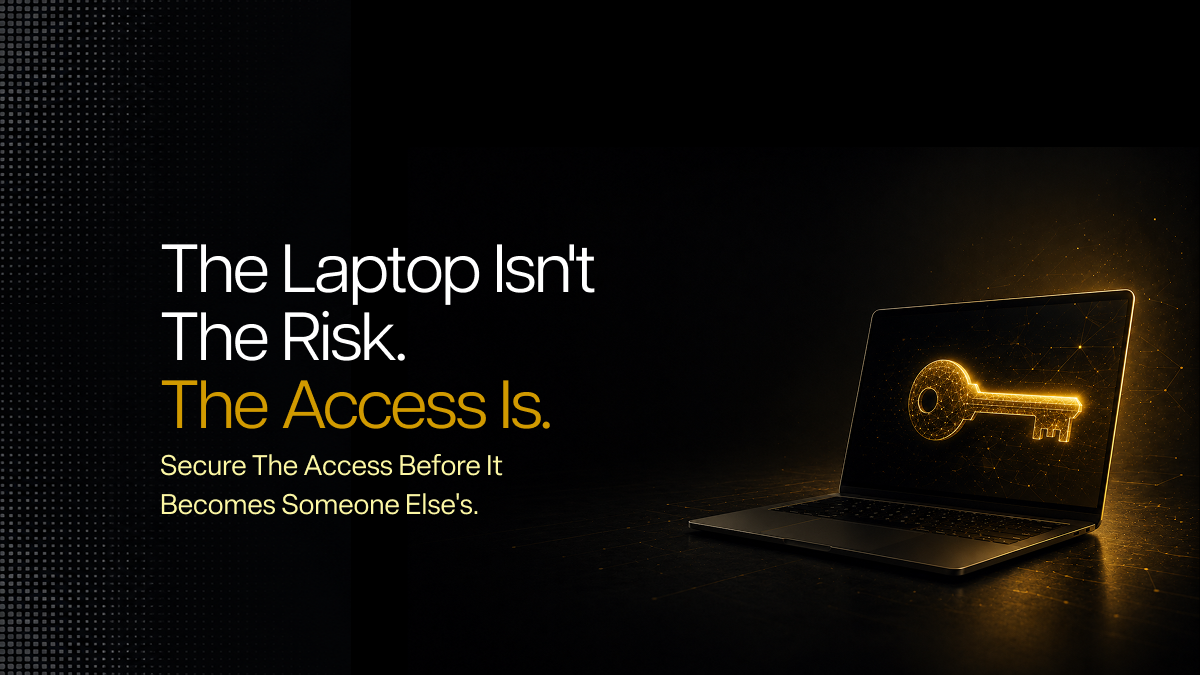
This blog explains why unmanaged laptops are one of the biggest cybersecurity risks for SMBs, especially in the UAE where teams often work from cafés, coworking spaces, airports, home networks, and client sites. It highlights that the real risk is not the laptop itself, but the access inside it: saved passwords, live email sessions, cloud drives, customer files, and business apps.
Walk into any café in Dubai or coworking space in Abu Dhabi and you are looking at the engine room of a dozen small businesses: rows of open laptops. For most SMBs, the laptop is the company. It holds the email, the customer list, the contracts, and the logins to every cloud tool the business runs on. It also travels everywhere, to client meetings, airport lounges, the back seat of a taxi, and home again each night. That mobility is the whole point of a modern startup, and it is also where the risk hides.
This is not a scare piece. The aim is to show why the laptop, of all your devices, is the endpoint security blind spot most SMBs overlook, and what you can do about it without spending a fortune.
Why Access Matters to Attackers
When a laptop is compromised, founders worry about the cost of replacing it. The real prize for an attacker is what is inside: saved passwords sitting in the browser, and live sessions still logged into email and the cloud drives where your files live. A cybercriminal who snags an unencrypted laptop is holding a working key to your business. The aluminium shell is the cheap part.
Picture a founder's laptop left on a café table in DIFC for two minutes while they order. If it is unlocked and unencrypted, whoever picks it up is already inside the business email and the shared drive, no hacking required.
The numbers back this up. Across major breaches tracked by regulators since 2009, roughly 54% traced back to lost or stolen unencrypted devices, laptops chief among them. A laptop is stolen somewhere in the world every 53 seconds, and a single missing one costs a company an average of around $49,000 once you add the lost data and the scramble to respond. A lost device also turns into a full identity compromise within hours, long before anyone reports it gone.
Why the UAE Raises the Stakes on Mobile Device Management
Two things make this sharper here. The first is how mobile the workforce is. Teams work from cafés, coworking hubs, hotel lobbies, and airport gates, hopping onto whatever Wi-Fi is open. The UAE recorded more than 12,000 Wi-Fi breaches in the first months of 2025, about 35% of all cyberattacks in the country during that period, much of it flowing through exactly those unmanaged connections.
The second is that the country is a target. The UAE has become the second most attacked nation in the region, absorbing roughly 12% of cyberattacks across the Middle East, and the average cyber incident now costs a UAE business about $2.9 million. Ransomware against UAE organisations also climbed 32% in 2024, and a stolen laptop is one of the simplest ways in. For a small company, a loss near that figure is rarely survivable.
Having an Antivirus Is Not Enough
Here is the doubt that comes up most. Antivirus feels like a finished job, so the laptop feels handled. The gap is that antivirus checks for known malware, and it does nothing about a device that walks out of a coffee shop unlocked, runs six months behind on updates, or belongs to an employee personally and was never set up by anyone. An unmanaged laptop is one nobody can see or wipe remotely. Given that 43% of SMBs have no dedicated security staff, that blind spot is usually nobody's job, which is how it stays open.
Affordable Endpoint Security Fixes
The reassuring part is that the fixes are cheap and mostly built into tools you already own:
- Turn on data encryption. BitLocker on Windows and FileVault on Mac are free, built in, and turn a stolen laptop into a paperweight.
- Enforce MFA everywhere, so a password lifted from a browser does not hand over the account behind it.
- Switch on device management. Microsoft 365 and Google Workspace include mobile device management (MDM) that lets you see your laptops and wipe a lost one remotely.
- Keep updates automatic, so patching is not waiting on a busy founder to remember.
- Add modern endpoint protection (EDR), which watches behaviour and gives you a real line of ransomware protection, rather than leaning on signature-based antivirus alone.
- Cover personal laptops too. If staff use their own machines, the same rules have to apply to them.
None of this needs a security team or a heavy budget. It needs the basics switched on and someone keeping an eye on them.
Where Lumora Fits
Most of these fixes are things a founder can switch on over a couple of evenings. Keeping them running, watching for the laptop that drops off the network or the update that quietly failed, is the part that tends to slip once the team is busy again. That is usually where a bit of outside help pays for itself.
Lumora is built for exactly that.
Lumora X folds your endpoint security into managed security services, with EDR and device hardening watched around the clock, so your laptops stay encrypted and patched without you hiring anyone to run it. A lost one can be wiped before the data walks off with it. And if you would rather just see where you stand first, the Essential Security Review gives you a clear read on your devices in about 72 hours.
Your laptops are already the most valuable thing your business carries around. Securing them is one of the cheapest, highest-return moves you can make.
Lumora helps UAE SMBs lock down their laptops and endpoints without a security team of their own. Book a free assessment or talk to us to see exactly where your devices stand.


.avif)