Is Effective Cybersecurity for Startups Possible Without a Security Team?
.png)
This blog explains how startups can manage cybersecurity without hiring a dedicated security team. It covers the core controls that should come first: Microsoft 365 security, MFA, endpoint security, DMARC, email protection, data backup, and basic monitoring. It also explains why startups should avoid scattered tools and instead build a clear security baseline. The blog ends by positioning Lumora’s Essential Security Review and Lumora X as practical ways to assess gaps, fix weak controls, and maintain security through managed security services.
Ask a startup founder in Dubai about their cybersecurity setup and you will often get a slightly guilty laugh. They know it matters. They also know that between shipping the product and chasing the next round, it never quite reaches the top of the list. Security gets filed under "we'll sort it properly once we hire someone," and that someone never gets hired.
Then the question arrives from outside: A client wants to know how you handle their data, or an investor's due diligence lands with a security questionnaire attached, and suddenly the thing you parked for tomorrow needs an answer today.
That's usually when the real worries surface: we don't have a security team and can't afford one, and we have no real idea whether we're protected.
Fortunately, you can run real security without a dedicated team, though, and a lot of small UAE-based companies already do. Additionally, products like Lumora X are built around exactly that idea: strong fundamentals for startups, without the hiring headaches being forced on you immediately.
Where the Worry Comes from When You Need Managed Security Services
A few worries come up again and again, and all of them are reasonable.
Cost is the big one. Security gets pictured as expensive tools plus expensive specialists, and a seed-stage company has spare cash for neither.
Skills are next. Nobody on the team has a security background, so the whole subject can feel like a language you never learned.
There is also the simple matter of time, because even when a founder knows what should be done, finding the hours feels impossible when the product and the next funding round are both on fire.
For some startups a fourth pressure sits at the top as well: compliance. If you touch payments or personal data, the UAE Personal Data Protection Law and your sector's rules start to apply whether you have a security team or not.
Underneath all of it sits a quieter and more dangerous belief: that you are too small to be a target. Attackers automate, they scan for weak entry points at scale and never check your headcount or revenue before getting in. Most of all, your business’s potential connections to larger clients will also make you a juicy target for hackers looking to exploit the supply chain.
Simply put, the UAE sees a regular stream of these automated attacks, and small businesses sit squarely in the blast radius. Smaller companies often get hit precisely because they assume nobody is looking, which makes them easier to reach than a large enterprise with a full security function.
What Essential Security Actually Looks Like
Here is the reassuring part. The goal for a startup is modest: get the fundamentals right and keep them current, so the easy attacks bounce off. Most breaches at small companies are not sophisticated. They trace back to a missing software update, a reused password, a phishing email that worked, or a backup nobody tested. Each of those has a fix that costs little and takes hours rather than headcount.
The bar does shift with what you do. If you operate in a regulated space, say a fintech under DFSA or ADGM rules, some controls are mandatory and the documentation matters more. For most other startups, the basics carry you a long way, and you can add depth as you grow into it.
Practical Ways to Achieve a Cybersecurity Baseline
When it comes to establishing cybersecurity for startups, you can put a real baseline in place with a mix of things you already own and a little outside help:
- Turn on what you already pay for. Microsoft 365 and Google Workspace bundle in MFA, conditional access, device controls, and audit logging that many startups never switch on. This is protection you have already bought.
- Get the basics right: keep software patched, use a password manager, lock down admin accounts, and run backups you actually test. A backup you have never restored is only a hope until the day you test it.
- Protect your email and domain, since most attacks start there. DMARC stops criminals spoofing your name to your own customers, and it is one of the cheapest wins available.
- Train your people in small doses. A short, regular phishing-awareness habit works better than a once-a-year lecture nobody remembers, and your team is your largest attack surface.
- Bring in managed security instead of hiring. A managed service gives you 24/7 monitoring and specialists on call for a predictable monthly cost, which is how most startups get a SOC without building one.
- Consider fractional expertise for the strategy. A part-time or virtual security advisor can set direction and review your big decisions without the salary of a full-time hire.
None of this requires a new hire on day one. It requires treating security as a real line item and giving it a few hours of attention up front, then letting tools and partners carry the ongoing load.
Knowing When to Bring in More Help – Letting Lumora Lead the Way
Doing it yourself works until it doesn't. A few signs that can tell you that the moment of truth has arrived could be when:
- You are handling sensitive customer or payment data and a breach would end the company.
- Customers and partners are sending security questionnaires you cannot confidently answer.
- You are heading into a funding round where due diligence will examine your controls.
- Or you simply notice that security keeps slipping because nobody owns it.
At that point, a managed partner is usually cheaper and faster than a first hire, and it gives you expertise from day one rather than after a six-month hunt.
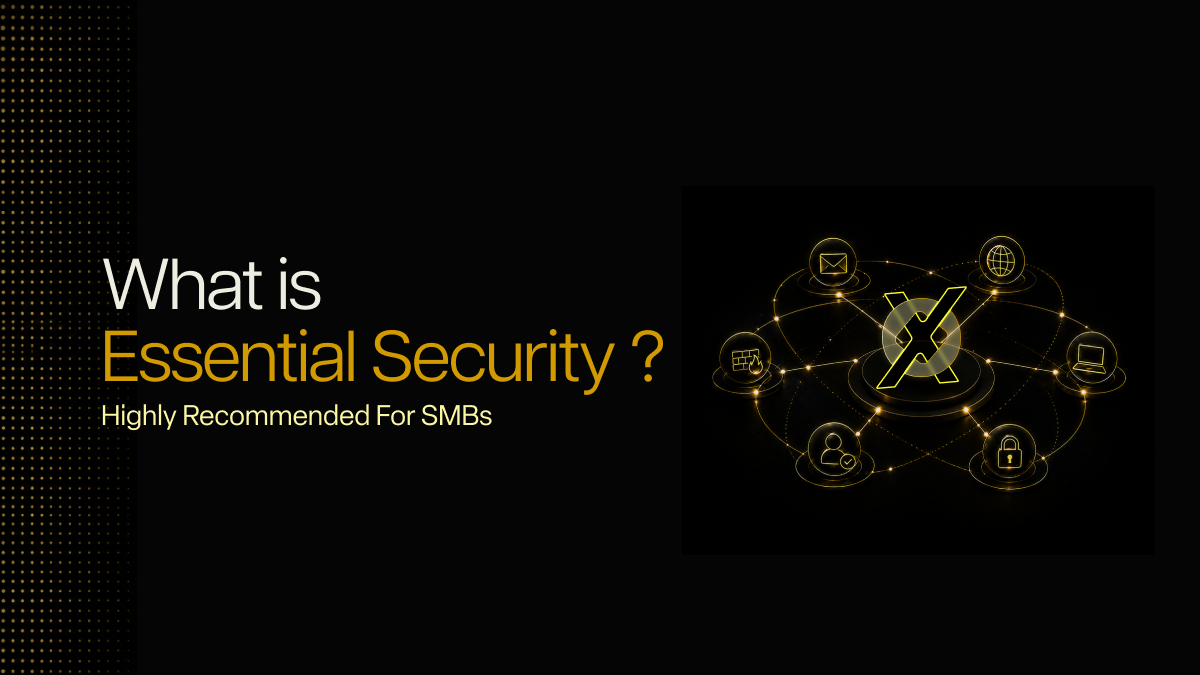
This is the exact problem we built Lumora X for. It gives startups a managed security baseline across endpoints, email, identity, and cloud, with 24/7 monitoring and security specialists on call, so you get the protection of a security team without hiring one. Because it is sized to your stage, you are not paying for enterprise tooling you will not touch for years. The controls map to recognised standards like NIST CSF, which helps the moment a customer or investor starts asking questions.
If you are not sure where you stand today, the simplest place to start is the Essential Security Review. It looks at your current setup and finds the gaps that matter, then hands you a prioritised list of what to fix, sized for a company at your stage rather than a large enterprise. You walk away with a clear picture in about 72 hours, along with a sense of what is urgent and what can wait.
Being secure without a dedicated team comes down to getting the right fundamentals in place and keeping them running, with a partner for the parts that need real expertise. When aiming for effective cybersecurity for startups, that is a very reachable goal. If you want a straight answer on where your security stands and a practical path forward, talk to Lumora.




.avif)